This practice is concerned with three distinct processes: mimicry, camouflage, and reproduction.
Much of the work originates as representational paintings of objects or figures, rendered from photographs. Painting is employed as a means to produce objects that operate within broader systems of meaning. Trompe l'oeil paintings of envelopes, photorealist works of ballet dancers from the choreography of Stravinsky's ‘Rite of Spring’, or reproductions of Duchamp's ‘Fountain’, each of which shift accordingly— from a mimetic depiction to a mechanism that activates a component within a process; from an image to be seen, to a way of understanding. The representational fidelity becomes less about illusion and more about how images circulate, perform, and obscure meaning.
This preoccupation with camouflage extends to an examination of the structure and surface of concealment. In 2020 the first series of an ongoing project of painted drop ceiling tiles was exhibited. These tiles, usually shown as diptychs or 4 part polyptychs, are objects designed to mask infrastructural and institutional inner workings. They are vehicles for examining borders, facades, and spatial compartmentalization. Their performance is a kind of camouflage, as objects which hide in plain sight, and led me to reconsider their identity as expression, not as negation but as a potential site of resistance.
This work resists a stable position between representation and abstraction, original and copy, author and audience, instead troubling these binaries altogether. In doing so, they blur distinctions between what is seen and what is hidden, offering a space for liberation after images.
-Chris Riddle, 2026
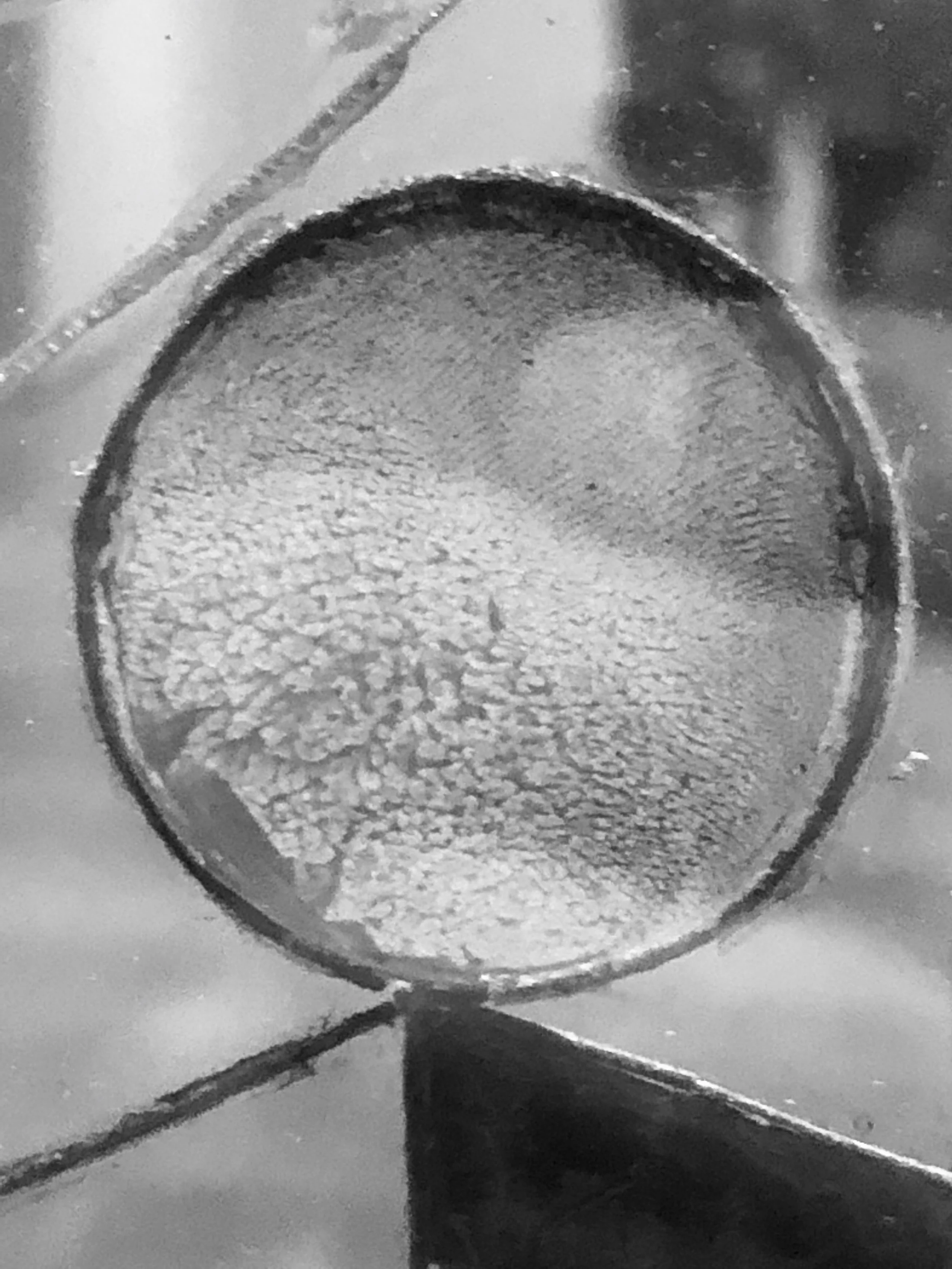
Duchamp’s fingerprint